Flyers aren't dead — they're just mostly bad. Walk into any coffee shop, laundromat, or community board and you'll see dozens of flyers that all make the same mistakes: too much text, no visual hierarchy, clip art from 2008, and a QR code nobody will scan.
But a well-designed flyer still works. It's one of the cheapest, most direct ways to reach local customers. Here's what separates the ones that get results from the ones that end up in the recycling bin.
1. One Clear Message
The number one mistake: trying to say everything. A flyer is not a brochure. It's not your website. It has roughly two seconds to grab attention and communicate one thing.
Before you design anything, answer this: What is the single thing you want someone to do after reading this? Call you? Visit your website? Show up on Saturday? Everything on the flyer should point to that one action.
2. Visual Hierarchy That Guides the Eye
A good flyer has three levels of information, and the reader should process them in order without thinking:
- Headline — the hook. Big, bold, impossible to miss. This is the reason someone stops and reads instead of walking past
- Supporting details — date, time, location, price, or one sentence of context. Keep this tight
- Call to action — phone number, website, address, or QR code. One way in, not five
If you can't identify these three levels at a glance, the flyer needs simplifying. This is one of the most common design mistakes I see →
3. Quality Photography or Graphics
Stock photos are fine if they're good stock photos. But a blurry phone photo, a stretched logo, or a pixelated background will make your business look amateur — regardless of how good your product or service actually is.
If you don't have professional photos, use bold typography and color instead. A text-driven flyer with strong design will always outperform a photo-driven flyer with bad photos.
4. Brand Consistency
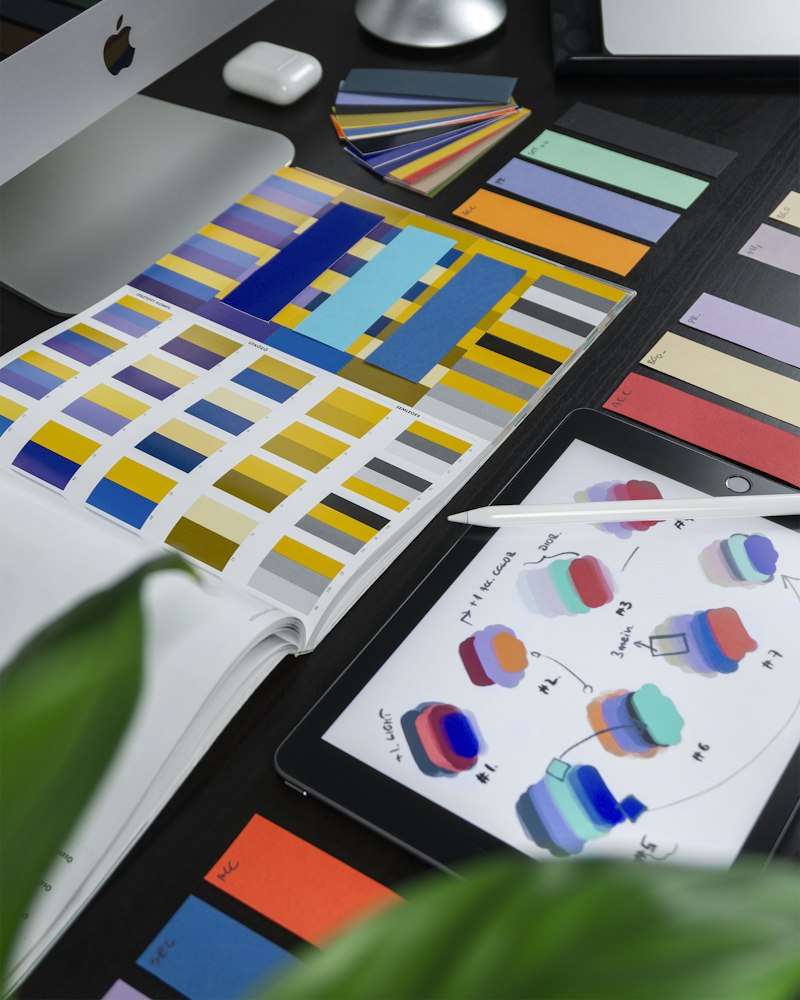
Your flyer should look like it belongs to the same business as your website, social media, and storefront. That means using your brand colors, fonts, and logo — not whatever the print shop template defaulted to.
Consistent branding increases revenue by up to 23% → and flyers are one of the most visible touchpoints for local businesses.
5. Print-Ready Specs
This is where DIY tools like Canva often fall short. Professional print requires:
- 300 DPI resolution (not the 72 DPI that screens use)
- CMYK color mode (not RGB — colors shift in print)
- Bleed and safe zone (3mm bleed, keep text 5mm from edges)
- PDF/X format for commercial printing
A professional designer handles all of this automatically. If you've ever had a print job come back with cut-off text or wrong colors, it's almost always a specs issue.
6. A Reason to Keep It
The best flyers give people a reason not to throw them away: a coupon, a discount code, a date to remember, or a tear-off tab. If the flyer has utility beyond the initial read, it stays in the world longer and gets more impressions.
What Does a Professional Flyer Cost?
| Provider | Cost per Flyer | Turnaround | Print-Ready? |
|---|---|---|---|
| Canva (DIY) | $0 + your time | Immediate | Limited |
| Freelancer | $100–$500 | 3–7 days | Usually |
| Print shop design | $50–$200 | 1–5 days | Yes |
| Loudest Creative | Included in plan | 1–4 days | Always |
With a Loudest Creative plan ($749–$1,999/month), flyers are just one type of request alongside your social posts, menus, signage, and everything else. No per-project fees. See the full pricing breakdown →
Loudest Creative designs flyers that actually get results — print-ready, on-brand, delivered in 1–4 days. Plans from $749/month, no contracts. See plans or submit your first flyer request →
James
Founder, Loudest Creative
James builds high-performance websites and creative services for local businesses across the country. Every site is custom-designed and hand-coded from scratch.